
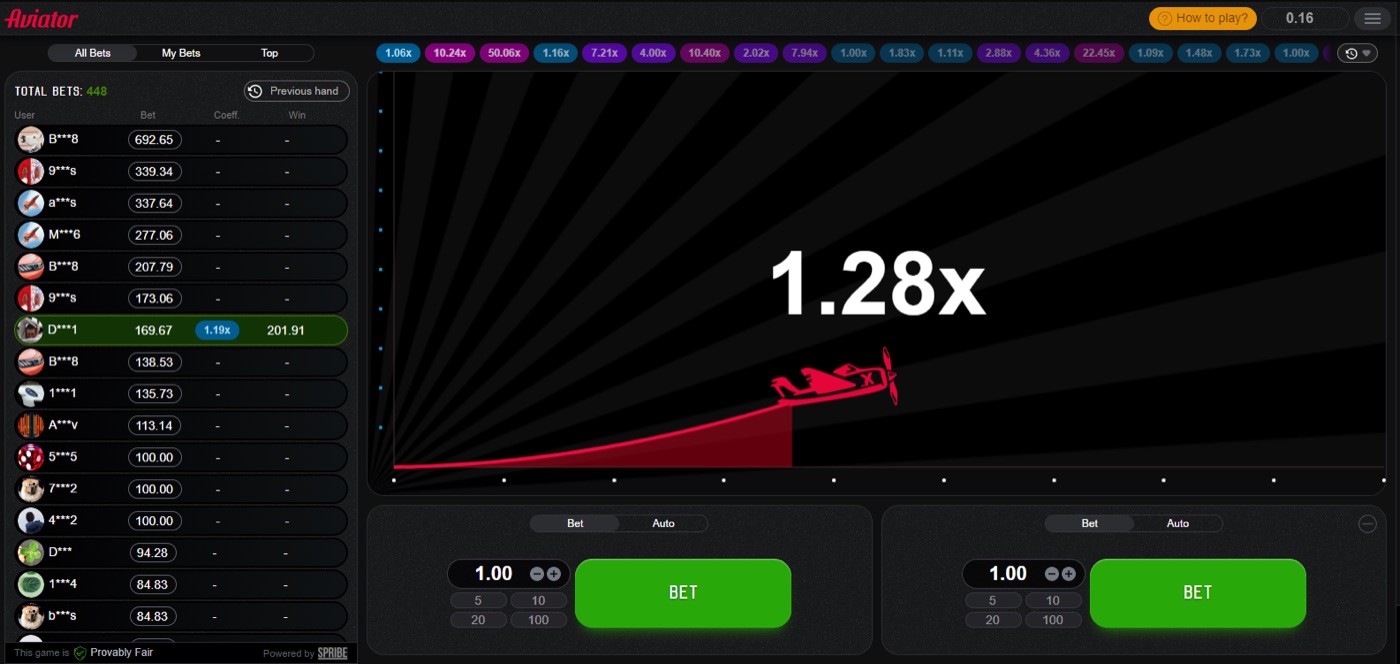
A beginner sees a plane, a rising multiplier and a cash-out button. The round can end at any point. That simple screen hides several decisions that affect how quickly money leaves an account.
Aviator is Spribe’s crash game. It is not a slot and has no bonus round. The main beginner errors are easy to name: skipping demo mode, using stakes that are too large, trying to time a manual cash-out, chasing losses and treating charts as forecasts.
Demo Mode Shows The Controls
Aviator’s demo mode needs no registration. The game runs in desktop, tablet and mobile browsers.
The demo uses the same visible controls as the live interface. It lets a beginner inspect the Bet and Auto tabs, two bet panels, cash-out controls, the round history and the live bets panel without staking money.
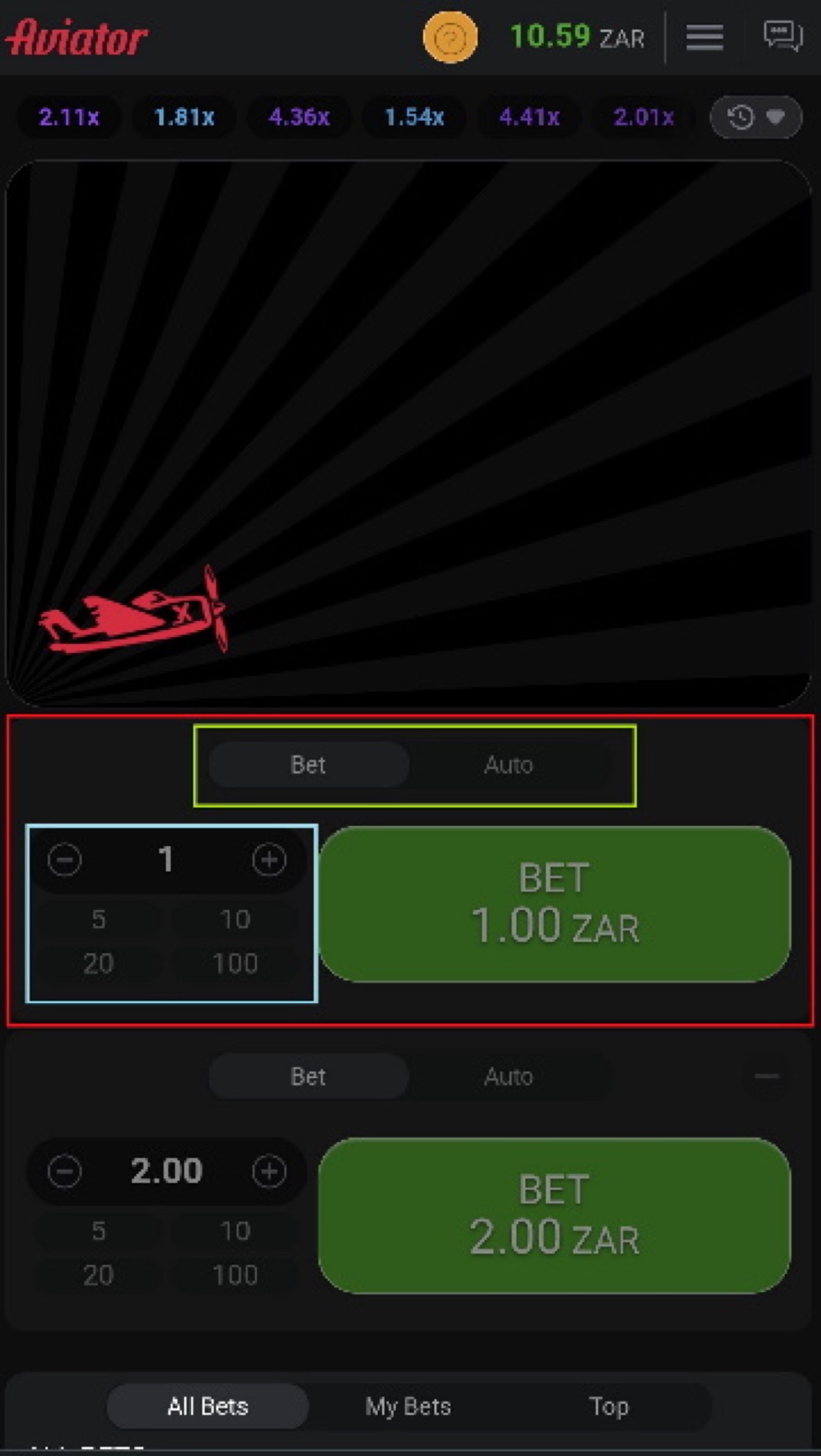
The mobile view places the multiplier and betting controls on one screen.
Skipping this stage creates a practical problem. A player may not know which panel is active, where the Auto Cash-Out value sits or how a second bet is handled. A cash-out request also has to reach the server before the crash, so unfamiliar controls add avoidable pressure.
- Open the demo before making a live deposit.
- Place a virtual bet in each of the two panels.
- Test a manual cash-out at a low multiplier.
- Check how Auto Cash-Out behaves at a preset multiplier.
- Read the round history without treating it as a forecast.
The demo is also useful for checking a device and connection. Spribe describes Aviator as built for low bandwidth and budget devices. That does not improve the odds, but it can show whether the screen responds clearly enough for the player to use it.
- Watch several rounds without betting.
- Use one panel with a manual cash-out.
- Use the other panel with Auto Cash-Out.
- Stop the session and review whether the controls were clear.
Demo practice does not reveal a winning method. It teaches the interface. That distinction matters. A player can learn where to press without learning when a round will crash, because the crash point is fixed before take-off and cannot be predicted from the screen.
Stake Size Controls Exposure
Typical Aviator stakes range from about $0.10 to $100 per bet, depending on the operator. A commonly cited guide rule is no more than 2% of a bankroll per round.
A $100 bankroll makes 2% equal to $2. A $500 bankroll makes 2% equal to $10.
| Bankroll | 2% reference stake | What it illustrates |
|---|---|---|
| $50 | $1 | A small stake limits one-round exposure. |
| $100 | $2 | The same percentage produces a larger dollar amount. |
| $500 | $10 | A fixed $10 stake is 2% here but 20% of a $50 bankroll. |
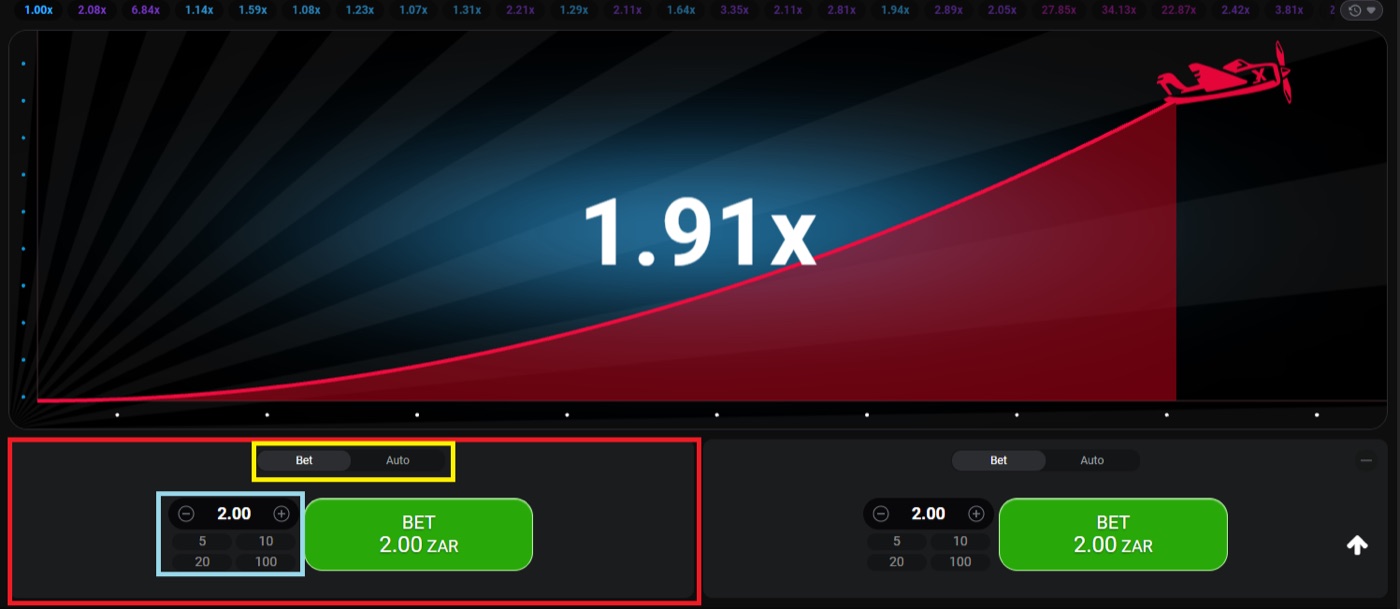
The desktop round shows a 1.91x multiplier and two separate bet panels.
The percentage is a reference, not a promise. Aviator has a 97% RTP and a 3% house edge. The expected value is minus 3% of the stake at every cash-out target. A smaller stake does not remove that edge. It reduces the amount exposed when the edge applies.
Variance is the other issue. About 3% of rounds, roughly 1 in 33, crash instantly at 1.00x. A $50 bet loses $50 on that round. A $1 bet loses $1. The round result is the same, but the effect on the bankroll is not.
- Choose a stake as a percentage of the planned bankroll.
- Keep the amount stable rather than raising it after a loss.
- Remember that two bet panels can expose two stakes in one round.
- Include both panels when calculating the total amount at risk.
The two-panel design can create a false sense of control. A player might place one bet for an early cash-out and another for a higher target. That changes how the stake is divided. It does not change the 3% edge or make the second bet safer.
For example, a $10 total stake can be split into two $5 bets. One may use Auto Cash-Out at 1.5x while the other remains manual. The split changes the possible outcomes and variance. It does not turn a negative expected value into a positive one.
Manual Timing Meets Latency
Aviator rounds last about 8 to 30 seconds. The game offers 60 to 90 rounds per hour, with only a few seconds between rounds.
The crash point is fixed before take-off. A manual cash-out succeeds only when the request reaches the server before that point.
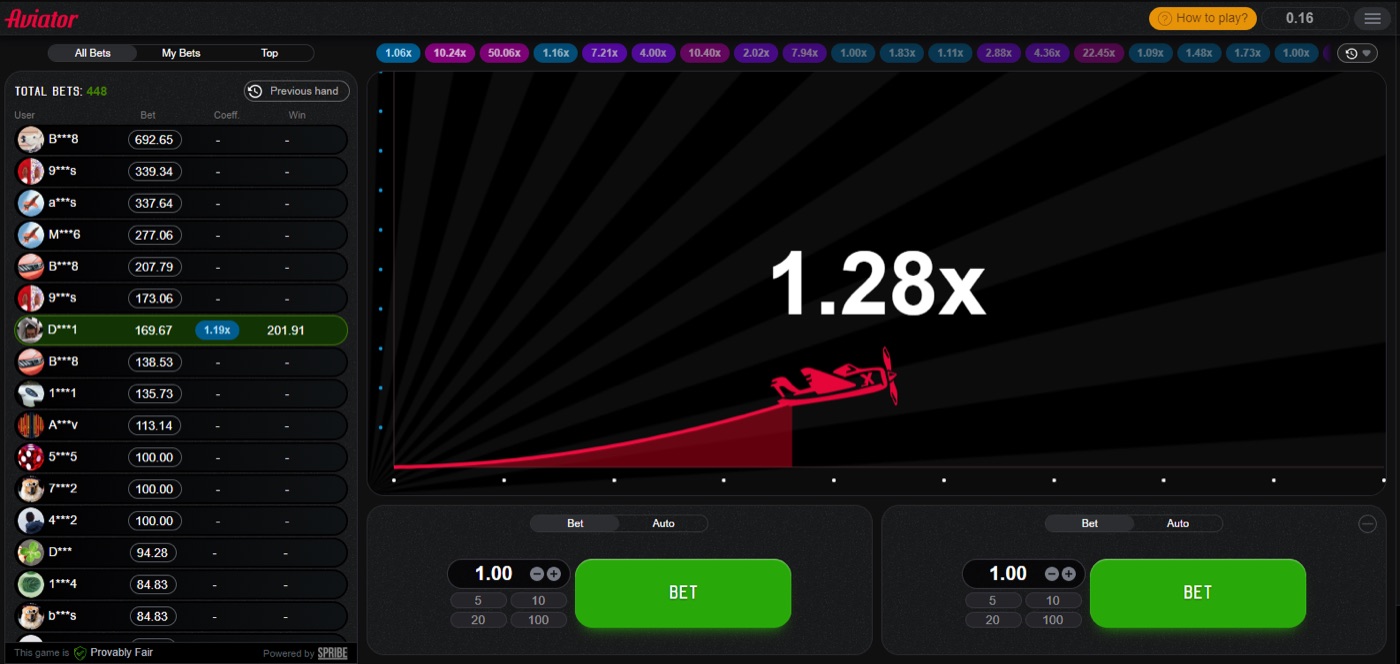
The game screen shows the plane in flight while the multiplier increases.
This makes manual timing a response decision, not a prediction tool. The player can decide to cash out at 1.5x or 2x. The player cannot know that the round will reach either value before it does.
A cash-out timeout can feel like a changed result. Guides attribute these complaints to latency or a slow device. The request must reach the server before the crash. Pressing the button at the last visible moment is therefore not the same as receiving a successful cash-out.
Auto Cash-Out removes one manual press. It does not remove the risk. The player sets a multiplier, and the bet attempts to cash out at that value. If the crash comes first, the bet loses.
- Manual cash-out requires a live connection and a timely request.
- Auto Cash-Out uses the preset multiplier shown in the interface.
- A slower device can make the visible action feel late.
- A higher target remains less likely to be reached than a lower target.
For context, a player reading about a crash game may encounter cassino betano aviator while comparing stake and cash-out information. The link does not change how Aviator’s multiplier or server response works.
The published probabilities show why manual timing should stay modest. A 1.5x round occurs with a probability of 64.7%, while a 5x round occurs with a probability of 19.4%. A player choosing a higher target accepts a lower chance of reaching it, even if the screen has recently shown several rising multipliers.
- Set the intended cash-out before the round starts.
- Do not move it upward because the multiplier is still rising.
- Do not assume a fast button press can override the crash point.
- Check connection and device response in demo mode first.
Losses Do Not Need Chasing
Martingale doubles the stake after each loss. Ten consecutive doubles take the stake to 1,024 times the base stake.
Aviator rounds are independent. A previous loss does not make the next round more likely to reach a chosen multiplier.
Suppose the base stake is $1. The sequence becomes $1, $2, $4, $8 and continues until the tenth loss requires $1,024. The arithmetic is the problem. A small starting amount can become a large required stake without any change in the game’s 3% edge.
Fibonacci and D’Alembert systems have the same basic weakness. They change the size and sequence of bets. They do not change the crash probabilities, the 97% RTP or the expected value of minus 3% of the stake at every cash-out target.
- Do not raise the next stake solely because the last round lost.
- Set a loss limit before live play begins.
- Set a win limit before a winning run changes the plan.
- Stop when either limit is reached.
A winning round does not justify increasing the next stake either. If a $10 bet cashes out at 2x, the result does not make the following round safer. The next crash point remains an independent result.
A responsible gambling rule should be simple: stop when the planned loss limit is reached, and do not use money needed for other expenses.
Auto Bet and Auto Play can run from 10 to 100 rounds. Stop-on-win and stop-on-loss settings can structure a session, but automation does not alter the result distribution. It can also make a session move through rounds faster than a beginner expects.
Charts Only Show History
The round history displays previous multipliers at the top of the interface. The live bets panel displays current activity through All Bets, My Bets and Top views.
Neither display changes the next crash point. Spribe combines player client seeds with a server seed, and the server publishes a SHA-256 hash before each round.
The hash is part of the provably fair process. Inputs are revealed after the round and can be checked with the verification tool inside the game. Neither the operator nor Spribe can change a result after the round starts.
That process is not a chart-reading system. A history such as 1.20x, 2.00x, 1.10x and 5.00x records what happened. It does not create a sequence that must balance in the next round.
- A long run of low multipliers does not require a high multiplier next.
- A recent 10x result does not make another 10x result due.
- A graph cannot identify a guaranteed entry point.
- A strategy chart PDF cannot change independent round probabilities.
The numbers make the difference clear. The probability of reaching 2x is 48.5%. The probability of reaching 10x is 9.7%. These are probability statements for the selected target, not predictions made from the recent chart.
Claims about a best time to play also confuse connection quality with odds. Playing off-peak may provide a smoother connection, but the available information gives no better multiplier odds for any time.
- Use history to review prior rounds only.
- Use the fairness tool to check revealed inputs.
- Ignore patterns that claim to forecast the next crash.
- Keep stake decisions separate from the last displayed multiplier.
Aviator FAQ
Aviator launched in early 2019. Spribe describes it as a social multiplayer game with an increasing curve that can crash at any time.
The game has a 97% RTP and a 3% house edge. Those figures apply to the game mathematics, not to a personal session result.
Can an app predict Aviator?
No. The crash point is fixed before take-off through the provably fair process. Third-party apps, predictor labels and Telegram signal bots cannot calculate the unrevealed result from the public screen. Apps using names such as “Predictor v4.0”, “v8” or “v12” are marketing labels, not Spribe products.
Can I play Aviator for free?
Yes. Demo mode exists through an operator demo and demo.spribe.io, and it needs no registration. Demo play lets you practise controls, but it does not produce real winnings or prove that a strategy will work with a live stake.
How should a beginner choose a stake?
Use a fixed amount that fits the planned bankroll. Guides commonly state no more than 2% of bankroll per round. Stakes and win caps depend on the operator, so the amount displayed at one bookmaker may not match another.
Does manual cash-out beat Auto Cash-Out?
Neither option changes the house edge. Manual cash-out requires the request to reach the server before the crash. Auto Cash-Out sends the bet toward a preset multiplier. The choice changes control and timing, not the underlying probabilities.
Is Aviator rigged when a cash-out times out?
A timeout can result from latency or a slow device when the cash-out request does not reach the server before the crash. The provably fair system publishes a hash before the round and allows the revealed inputs to be checked after it ends.